

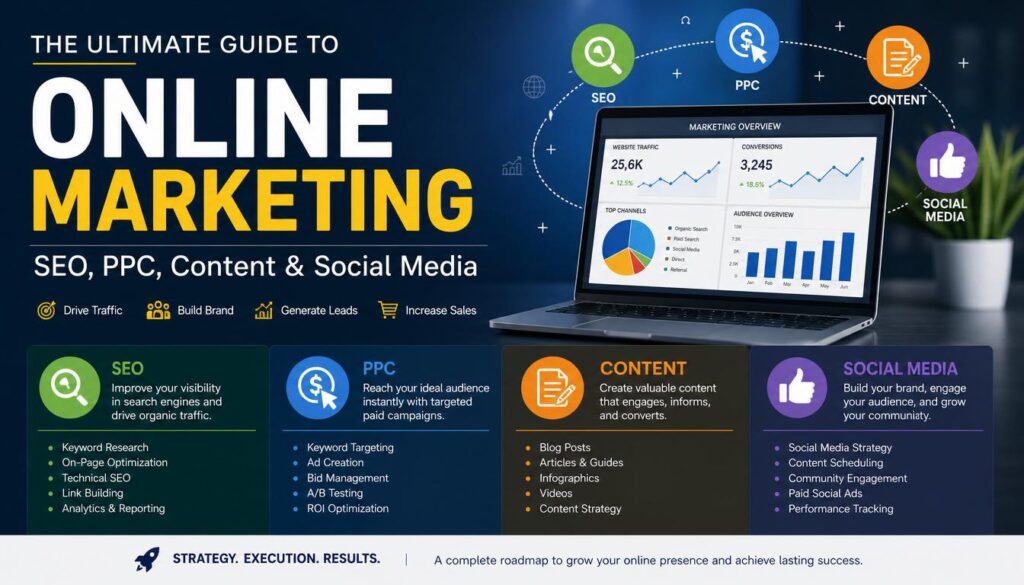
Online marketing covers every way a business reaches customers through the internet: search engines, websites, content, email, social media and paid advertising. The channels differ, but they share one aim, which is to bring the right people to a clear offer and make it easy for them to act. This guide explains how SEO, pay-per-click advertising, content marketing and social media fit together, and how to build a balanced plan without wasting budget.
Understand the basics of online marketing
Online marketing works when it matches what people want at each stage. Some visitors are only learning about a problem, others are comparing options and others are ready to buy. Your website, content and campaigns should serve all three groups. Start by defining your customer, your main offer and the action you want visitors to take, such as calling, booking or purchasing.
Build a website that supports your marketing
Your website is the centre of online marketing, because every channel eventually points to it. Make sure it loads quickly, works on phones, explains the offer clearly and gives obvious ways to contact you. Include trust elements such as reviews, policies and company details. Set up analytics so you can see where visitors come from and what they do.
Search engine optimisation
SEO helps people find your pages without paying for each click. It involves technical health, helpful content, clear titles and links from other sites. Results build over time, which makes SEO valuable for long-term growth. Learn the steps in our SEO and digital marketing checklist, and refer to Google’s official SEO starter guide for the fundamentals.
Pay-per-click advertising
With pay-per-click ads you pay when someone clicks. Search ads reach people who are actively looking for something, while display and social ads build awareness. Start with a small budget, a specific audience and a landing page that matches the advert. Monitor cost per enquiry or sale and stop campaigns that remain unprofitable. Google provides detailed training in its Google Ads Help Centre.
Content marketing
Helpful articles, videos and guides attract visitors and build trust. Choose topics based on customer questions and keep quality high. Content supports SEO, email, social media and sales conversations. See our content marketing tips for planning and promotion ideas.
Social media marketing
Social platforms allow you to show personality, answer questions and stay visible. Focus on the platforms your customers use and post consistently. Our guide to social media marketing strategies offers practical steps for small businesses.
Email marketing
Email lets you communicate directly with people who have agreed to hear from you. Use it to welcome new subscribers, share helpful content and announce relevant offers. Respect consent rules and make unsubscribing easy.
Combine channels into a simple plan
Think of the channels as a system. Content and SEO attract visitors, social media extends reach, ads accelerate tests and email builds long-term relationships. Choose one main goal for the quarter, pick two or three channels to support it and assign someone to track results. Adding channels gradually prevents overload.
Measure results and adjust
Track visitors, leads, sales, cost per customer and return on spend. Compare channels fairly, remembering that some, like SEO, take longer. Review monthly, keep what works, improve what shows promise and stop what does not. For a wider overview of tactics, read our digital marketing strategies guide.
Common online marketing mistakes
Many small businesses try every channel at once and master none. Others send traffic to a weak website, hoping advertising will fix the problem. Some measure only clicks or followers instead of enquiries and sales, and many forget to update older content, which gradually loses relevance. Another frequent error is changing strategy too early, before a channel has had a fair test. A written plan with specific goals, a test period and a review date helps you resist panic decisions and keep learning from real results.
A sample budget approach for beginners
If your budget is small, spend first on essentials: a clear website, basic analytics and a way to collect email addresses. Allocate a modest amount to one paid test, such as a search campaign for your most valuable service, and invest time rather than money in content. Review results after eight to twelve weeks. If a channel produces customers at an acceptable cost, increase its budget slowly. If not, change the offer, landing page or audience before spending more. Keep a small reserve for opportunities and unexpected costs.
How the channels support each other
A visitor might first discover you through a helpful article, join your email list, see a reminder on social media and finally click a search ad when ready to buy. Each channel contributes, so evaluating them in isolation can be misleading. Look at the customer journey as a whole, ask new customers how they found you and compare results over time rather than focusing on single clicks.
Legal and ethical basics
Be honest in your advertising, disclose paid relationships and respect privacy and consent rules in the places where your customers live. Use only images and text you have the right to use, and keep records of permissions. Avoid fake reviews and misleading urgency, because they damage trust and may break consumer protection laws. Responsible marketing is also better marketing, since customers who feel respected are more likely to return and recommend you.
Skills to develop over time
You do not need to master every discipline at once. Start with clear writing, basic analytics and an understanding of your customers. Add search optimisation, advertising and email management as your needs grow, and consider hiring specialists for tasks that take too much time. Learning from free official guides, such as those from search engines and consumer agencies, keeps your knowledge practical and current.
Key takeaways on online marketing
Successful online marketing is a system: a clear website, search visibility, helpful content, email, social media and carefully tested advertising. Choose two or three channels for each quarter, measure results monthly and keep a written record. Honest, consistent online marketing builds trust that paid campaigns alone cannot buy. Use this guide to plan your next quarter of online marketing and adjust as the evidence arrives.
Frequently asked questions
Which online marketing channel is best?
It depends on your audience and goals. Many businesses begin with a good website, search visibility and email.
How much should I spend on online marketing?
Start with an amount you can afford to test and increase it when results are profitable.
How soon will I see results?
Paid ads can show results quickly, while SEO and content usually take months.