

Content marketing tips are most useful when they help you attract the right visitors, not just more visitors. Content marketing means creating helpful articles, videos, guides or tools that answer real questions, then making them easy to find. Done well, it builds trust, supports sales and keeps working long after publication. This guide covers practical content marketing tips for website traffic and qualified leads, from choosing topics to measuring results.
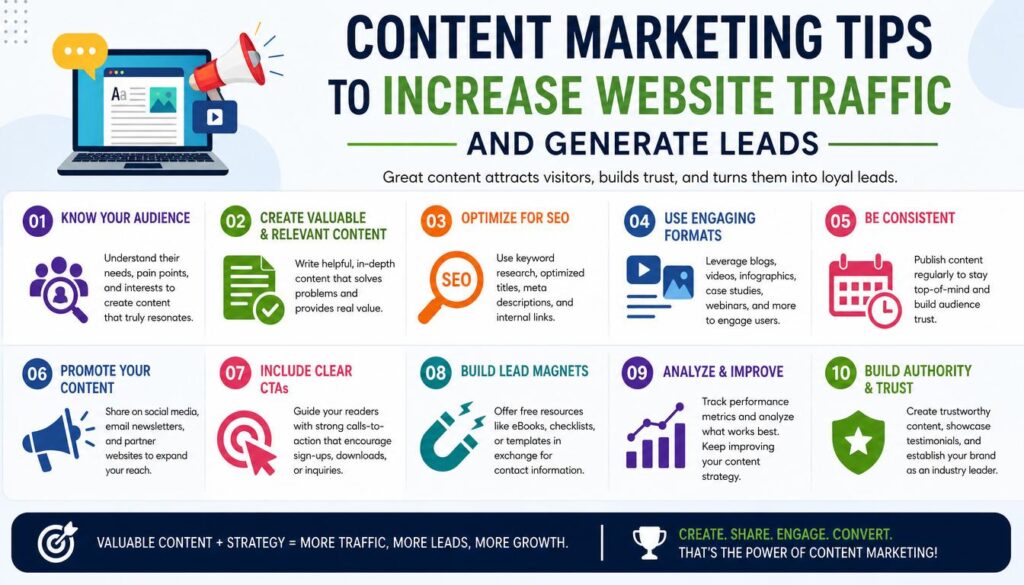
Start your content marketing tips with a goal and an audience
Decide what the content should achieve: newsletter sign-ups, quote requests, product sales or simply better brand awareness. Then define the audience in specific terms. A beginner searching for basic advice needs different content from an experienced buyer comparing suppliers. When the goal and reader are clear, topic choices, tone and calls to action become much easier.
Research the questions your customers ask
Great topics come from real conversations. Review support emails, sales calls, reviews and social comments, and list the questions that appear again and again. Search for those questions yourself and see what already ranks. Look for gaps where existing answers are outdated, shallow or confusing. Your own experience, data and examples can fill those gaps and make your content more useful than generic summaries.
Match content to the buyer journey
People move from learning to comparing to deciding. Educational articles attract early readers, comparison guides help people evaluate options and detailed case studies or FAQs support final decisions. A balanced content plan includes all three stages. If you only publish top-of-funnel posts, you may get visits but few leads; if you only publish sales pages, fewer people will find you.
Write for people first, search engines second
Search engines reward pages that satisfy readers. Answer the question quickly, then add depth. Use clear headings, short paragraphs and descriptive link text. Google’s advice on creating helpful, reliable, people-first content is a strong checklist for quality. Include real experience, avoid filler and do not stuff keywords unnaturally. Our SEO and digital marketing checklist explains the technical side.
Build a manageable publishing schedule
Consistency matters more than volume. Choose a schedule you can maintain, such as one detailed article every two weeks, and plan topics a month ahead. A simple calendar with title, goal, owner and publication date keeps the work organised. Reserve time for updating older posts, because refreshing accurate, popular pages often brings better returns than writing something new.
Make each page easy to read and use
Many visitors skim. Use informative headings, bullet points for lists, short paragraphs and meaningful images with descriptive alt text. Make sure pages load quickly and read well on mobile. Link to related guides so readers can continue learning. Place calls to action where they make sense, for example a checklist download after a how-to section, rather than interrupting every paragraph.
Capture leads with permission
Offer something helpful in return for an email address, such as a template, checklist or short course. Explain what subscribers will receive and how often. Follow privacy and consent rules in your region. A welcome email that delivers the promised resource and introduces your business helps build the relationship. See our ideas for email marketing campaigns to plan what comes next.
Promote your content without spamming
Publishing is only half the job. Share articles where your audience already gathers, mention them in newsletters, answer related questions in communities with genuine value and ask partners to link when relevant. Avoid mass messages and low-quality link schemes. Slow, honest promotion builds a better reputation than aggressive tactics.
Measure what matters
Page views are only one indicator. Track organic visits, time on page, newsletter sign-ups, enquiries and sales influenced by content. Compare articles to learn which topics and formats work best. If a page has many visitors but few actions, improve the call to action or the match between the topic and offer. If a page converts well but has low traffic, consider promoting or improving its search visibility.
Update, combine and retire old content
Review your content library at least twice a year. Update facts, add new examples and fix broken links. Merge overlapping articles into one stronger guide and redirect old addresses where needed. Remove pages that are outdated, thin or no longer relevant. A smaller library of high-quality pages is better than a large archive of neglected posts.
A sample content plan for one quarter
Imagine a small accounting firm that wants more enquiries from freelancers. In the first month it interviews clients and lists the ten most common questions, then publishes two detailed guides about invoicing and tax records. In the second month it adds a downloadable checklist, writes a short email series that delivers it and updates an older article with current information. In the third month it reviews which guide generated the most enquiries, writes a deeper follow-up on that topic and links the new piece to the older ones. The plan is modest, but each step builds on the last.
Repurpose content without repeating yourself
One strong article can become a short video, a checklist, a newsletter section or a series of social posts. The aim is to adapt the format for different audiences, not to copy the same text everywhere. When you repurpose, change the introduction, examples and call to action so each version feels natural on its platform. This saves time while giving more people a chance to see your best work.
Use original evidence and experience
Readers and search engines increasingly value content that shows first-hand knowledge. Include examples from your own projects, simple photos of your process, results you have measured and honest notes about what did not work. Credit sources when you use data and link to official or well-known references. Original evidence makes your content harder to copy and more convincing to potential customers.
Avoid common content marketing mistakes
- Publishing without a clear reader or goal.
- Copying competitor topics without adding anything new.
- Writing long pages that bury the answer.
- Ignoring updates and broken links.
- Measuring only traffic and not enquiries or sales.
Catching these habits early keeps your content library useful and protects your reputation.
Key takeaways on content marketing tips
The most effective content marketing tips start with real customer questions, helpful answers and a schedule you can maintain. Use these content marketing tips to plan topics, improve existing pages, capture subscribers with permission and measure leads rather than page views alone. Over time, simple content marketing tips compound into a library that earns trust and traffic. Pick one of the content marketing tips above and apply it to your next article.
Frequently asked questions
How long does content marketing take to work?
It usually takes months to see steady organic results. Plan for a long-term effort and review progress regularly.
How long should articles be?
Length should match the topic. Cover the question thoroughly and clearly, without padding for the sake of word count.
Can a small business do content marketing alone?
Yes. Start with a few high-quality pages that answer customer questions and improve them over time.

5 Responses