

Google AI search and SEO is now a practical concern for anyone who publishes a website. Search results increasingly include AI-generated overviews that summarise information and link to sources, which changes how people discover pages. Nobody outside the search companies can promise exactly how these systems choose links, but the underlying advice is stable: publish accurate, useful and clearly organised content that shows real experience. This guide offers a practical website checklist.
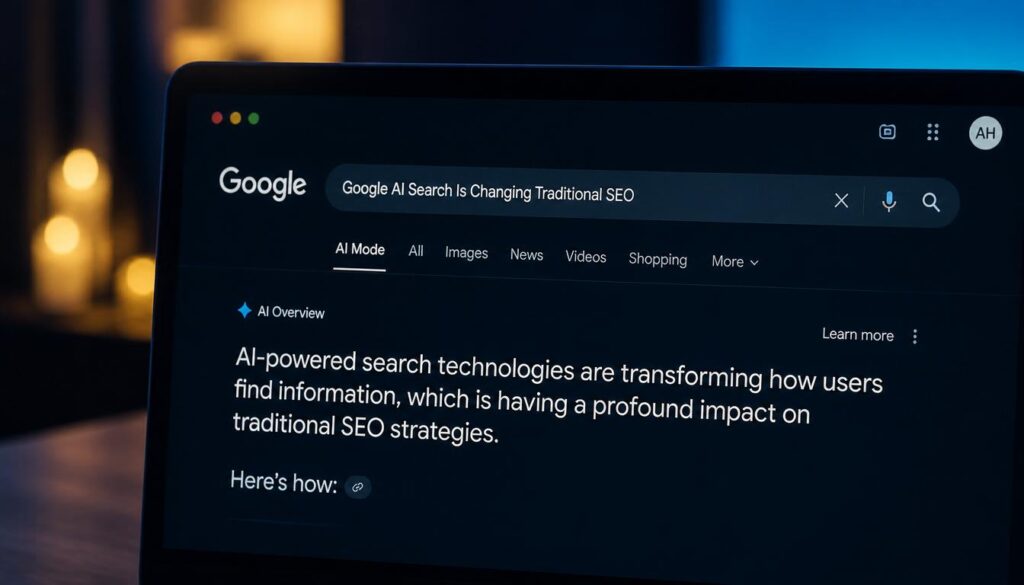
How Google AI search affects website visibility
AI-generated overviews answer some questions directly on the results page. For simple facts, users may click less often, while for complex or local needs they still need detailed pages, products and services. Visibility therefore depends on being useful in situations where a summary is not enough. Google explains how its AI features relate to websites in its documentation on AI features and your website, and site owners should read it directly because details can change.
Focus on helpful, people-first content
Search guidance continues to emphasise content created for people rather than for rankings. Answer a clear question, provide original detail and make it easy to verify. Include first-hand experience, such as photos, test results or lessons from real projects. Avoid publishing large numbers of thin pages that repeat information found elsewhere. Our guide to content marketing tips explains how to plan pages around reader needs.
Make pages easy to understand
Clear structure helps both readers and machines. Use one main heading, descriptive subheadings, short paragraphs and lists where appropriate. State the answer early, then add context. Define terms and name entities, such as products, places and people, consistently. A well-organised page is more likely to be understood accurately, whether it is read by a person or processed by a search system.
Show expertise, experience and trustworthiness
Readers and search systems look for signs that content comes from a reliable source. Provide an author name and short biography where relevant, explain how you reached your conclusions, cite reputable sources and keep contact information visible. Update pages when facts change. For topics related to health, money or safety, be especially careful and consult qualified experts.
Keep technical SEO healthy
Technical basics still matter. Ensure pages can be crawled and indexed, load quickly on mobile, use secure connections and avoid blocking important content with scripts or restrictive settings. Use structured data when it accurately describes the page, and make sure it matches visible content. Review reports in Search Console for errors and manual actions. Our SEO and digital marketing checklist covers these steps.
Strengthen your brand and direct audience
People who know your name may search for it directly or visit without relying on a summary. Build relationships through email, communities and social media so you are not dependent on one traffic source. Our online marketing guide explains how channels support each other.
Monitor changes without panic
Track impressions, clicks, queries and conversions in Search Console and analytics. A drop in clicks may reflect changes in the results page rather than a problem with your page, so compare several pages and time periods. Keep a log of updates you make and any visible changes in search features. Respond with measured improvements rather than drastic rewrites.
Avoid risky shortcuts
Mass-producing pages with automation, copying text from other sites or using hidden tricks may violate search policies and harm your reputation. If you use AI to assist with writing, review every claim, add original value and be honest. Quality and usefulness remain the best long-term strategy.
A page-level checklist for AI-era search
Before publishing or updating any important page, run through a short checklist. Does the opening answer the main question in plain language? Is the information accurate and dated where necessary? Are there original details, such as photos, examples or measurements, that a generic summary would not include? Is the author or business clearly identified, with a way to get in touch? Do headings describe the content honestly, and do internal links lead readers to the next useful step? Finally, does the page load quickly and read well on a phone? A page that meets these points serves readers and gives search systems clearer signals about its purpose.
How to think about traffic changes
When clicks fall, avoid assuming the content has become worse. The results page may now answer more questions directly, seasonal demand may have shifted or competitors may have improved their pages. Compare impressions and clicks for individual queries, separate branded from non-branded searches and look at conversions rather than traffic alone. If a page still brings enquiries, it may be doing its job even with fewer visits. Decide what to improve based on this evidence, and make changes one at a time so you can see their effect.
Examples of content that remains valuable
Some content continues to attract visitors even when summaries are available: detailed how-to guides with images, comparison pages that explain trade-offs, local information based on real visits, tools and calculators, original research and experience-based reviews. These formats offer depth, context and trust that a short summary cannot easily replace. When planning new pages, ask what extra value a visitor receives by clicking through, and make that value obvious from the first screen.
Document your own reporting method
Write down which reports, dates and filters you use when judging performance, because changing the method silently can make normal variation look like a trend. Consistent measurement lets you compare months fairly and spot real changes in how people reach and use your pages.
Check your pages against the official documentation
Search features change faster than most guides, so make a habit of reading the official documentation for site owners every quarter and noting anything that affects your pages. Compare it with what you see in your own reports, and update your checklist so the whole team works from the same information.
Key takeaways on Google AI search and SEO
In an age of AI summaries, Google AI search and SEO still depends on accurate, original and well-organised pages. Review your most important pages against the checklist, keep technical SEO healthy and watch conversions, not just clicks. Whatever changes next, a sound approach to Google AI search and SEO rests on helpfulness, clarity and trust. Re-read the official documentation regularly and adjust your Google AI search and SEO plan with evidence.
For Google AI search and SEO, the practical rule is stable: keep pages accurate, original and easy to read. Check your Google AI search and SEO plan against official documentation every quarter, and let real data, not rumours, guide each update.
Frequently asked questions
Does Google AI search make SEO obsolete?
No. Websites remain the source of information and services, and clear, helpful content is still valuable.
Can I optimise specifically for AI overviews?
Follow general good practice: accurate content, clear structure and technical health. There is no guaranteed trick.
Should I block AI features from using my content?
That is a business decision with trade-offs. Review Google’s documentation and your goals before changing settings.

One Response