
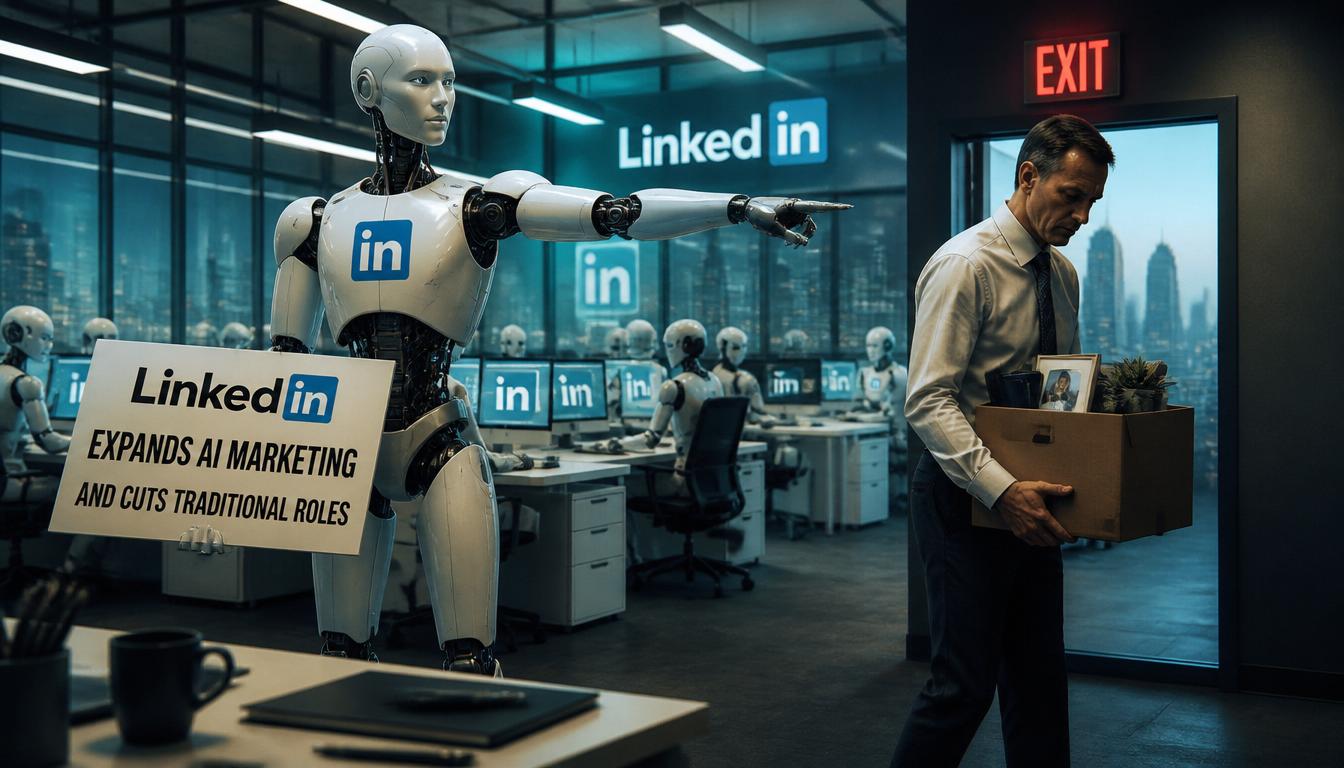
LinkedIn is undergoing a major transformation as artificial intelligence reshapes how the platform operates internally and how it delivers value to marketers. In 2026, the company has begun restructuring its marketing and operational teams, reducing traditional roles while increasing investment in AI-driven systems and automation tools.
This shift is part of a broader trend across the tech industry where companies are rethinking how work gets done. Instead of relying heavily on large human teams for campaign management, analytics, and content distribution, LinkedIn is increasingly turning to AI systems that can handle these tasks faster, cheaper, and at scale.
Recent reports show that LinkedIn has implemented workforce reductions affecting roughly 5% of employees as part of its restructuring strategy. At the same time, more resources are being redirected toward AI infrastructure and automated marketing workflows that can optimize campaigns in real time and reduce manual workload.
From a marketing perspective, this transformation is significant. LinkedIn has long been one of the most important platforms for B2B marketing, lead generation, and professional branding. Now, AI is changing how those services are delivered. Campaign targeting, ad optimization, and content recommendations are increasingly powered by machine learning models instead of traditional marketing teams.
The result is a more automated marketing ecosystem. Advertisers using LinkedIn can now benefit from smarter audience segmentation, predictive analytics, and real-time performance optimization. These improvements allow businesses to reach more relevant users while reducing wasted ad spend.
However, this shift also raises concerns about job displacement in marketing and media roles. Tasks such as campaign reporting, content scheduling, and basic optimization once handled by junior marketing staff are now being automated. Industry analysts note that this reflects a wider pattern across tech companies where AI adoption is directly linked to workforce restructuring and efficiency-driven layoffs.
Despite these challenges, LinkedIn continues to position AI as an enhancement rather than a replacement for human creativity. The company’s direction suggests a hybrid future where AI handles execution and data-heavy processes, while humans focus more on strategy, storytelling, and brand development.
For marketers, this change is a clear signal: adapting to AI tools is no longer optional. Understanding automation platforms, AI-driven analytics, and algorithm-based advertising systems is becoming essential for staying competitive in the digital marketing industry.
Ultimately, LinkedIn’s shift reflects a bigger reality in modern marketing. The industry is moving toward faster, smarter, and more automated systems but success will still depend on how effectively humans and AI work together to create meaningful results.