
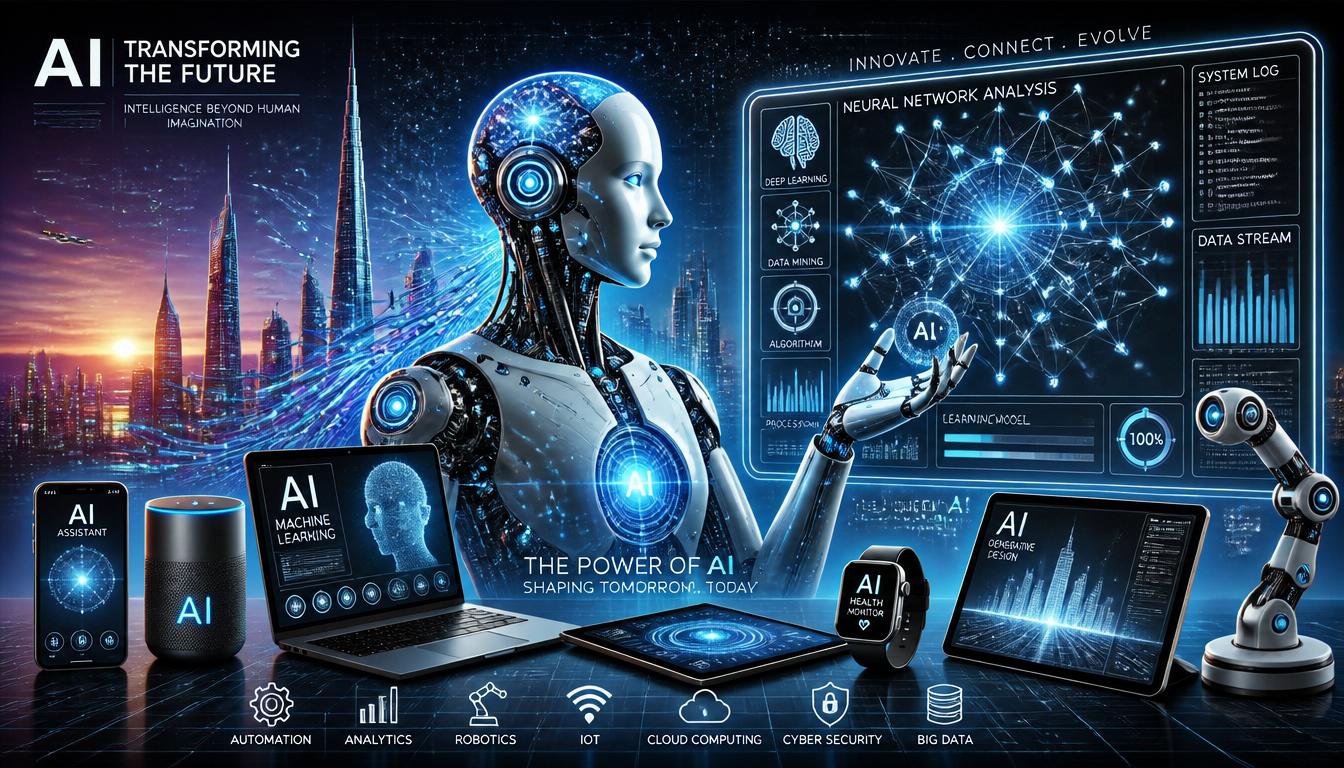
Artificial Intelligence (AI) is no longer a futuristic concept it has become the driving force behind modern technology. From smartphones and smart homes to healthcare and cybersecurity, AI is reshaping industries, improving efficiency, and changing how people interact with digital systems every day.
What Is Artificial Intelligence?
Artificial Intelligence refers to computer systems designed to perform tasks that normally require human intelligence, such as:
- Learning from data
- Recognizing speech and images
- Making decisions
- Solving problems
- Understanding language
Modern AI technologies include machine learning, deep learning, natural language processing (NLP), and computer vision.
AI in Everyday Technology
AI is now integrated into many devices and services people use daily.
Smart Assistants and Voice Technology
Virtual assistants like Siri, Google Assistant, and Alexa use AI to understand voice commands, answer questions, and automate tasks.
These systems continuously improve through machine learning, making interactions faster and more personalized.
AI-Powered Smartphones
Modern smartphones use AI for:
- Camera optimization
- Facial recognition
- Predictive text
- Battery management
- Real-time translation
Companies like Apple, Samsung, and Google are heavily investing in on-device AI to improve user experiences while enhancing privacy and performance.
Artificial Intelligence in Healthcare
AI is transforming healthcare through:
- Early disease detection
- Medical imaging analysis
- Drug discovery
- Personalized treatment plans
- Robotic surgery assistance
AI systems can analyze large amounts of medical data faster than humans, helping doctors make more accurate diagnoses and treatment decisions.
Example: AI in Medical Imaging
AI-powered tools can detect abnormalities in X-rays, MRIs, and CT scans with impressive accuracy, improving early diagnosis for diseases such as cancer and heart conditions.
AI and Cybersecurity
Cybersecurity has become one of the most important areas for AI innovation.
AI helps organizations:
- Detect cyber threats in real time
- Prevent fraud
- Monitor suspicious activity
- Automate security responses
As cyberattacks become more advanced, AI-driven security systems provide faster and smarter protection than traditional methods.
AI in Business and Automation
Businesses use AI to improve productivity and reduce operational costs.
Common applications include:
- Customer service chatbots
- Predictive analytics
- Automated workflows
- Personalized marketing
- Supply chain optimization
AI platforms help companies integrate intelligent systems into their products and operations.
Smart Homes and IoT
AI plays a major role in smart home technology by connecting devices through the Internet of Things (IoT).
AI-powered smart homes can:
- Adjust lighting automatically
- Optimize energy use
- Improve home security
- Control appliances through voice commands
Devices learn user habits over time, creating more convenient and energy-efficient living environments.
AI in Transportation
Artificial Intelligence is revolutionizing transportation through:
- Self-driving vehicles
- Traffic prediction systems
- Route optimization
- Autonomous delivery robots
Technology companies continue advancing autonomous driving technologies powered by AI and computer vision.
The Future of Artificial Intelligence
The future of AI includes major advancements in:
- Generative AI
- Robotics
- Human-computer interaction
- Personalized digital assistants
- Autonomous systems
As AI technology evolves, ethical concerns surrounding privacy, job displacement, bias, and regulation will also become increasingly important.